Friday, March 2, 2018

With "Black Panther" Black Women are No Longer Hidden Figures in Hollywood Blockbusters


By the end of its third weekend at the box office, “Black Panther” will become one of the ten highest grossing movies of all time. 

This is a remarkable achievement for any movie, and especially historic in this case since there is Black talent in abundance on BOTH sides of the lens. When it passes “Finding Dory” to enter the top ten list, it will be able to add at least one more accolade to its already long list of accomplishments. It will be the first movie on this list that proudly, and so prominently, feature Black women in a Hollywood blockbuster. 

Black actresses have been somewhat M.I.A. as main performers on the all time domestic grosses list for films. Out of the ten highest grossing movies ever, Black women have only been cast with major roles in four (one of the women appeared in two of the movies). Even more disheartening, those parts did not allow them to be seen for who they really are, in their natural beauty. They have literally been “hidden figures”. 

Lupita Nyong'O, Zoe Saldana, and Gugu Mbatha-Raw have each played characters in some of the biggest movie money makers ever. However, they each were relegated to parts that did not allow them the opportunity to appear in their own skin, instead appearing via computer effects. There is nothing wrong with doing this sort of work, but when opportunities are so few and far between for Black women in Hollywood films, compared to their counterparts, this situation is worth pointing out.  
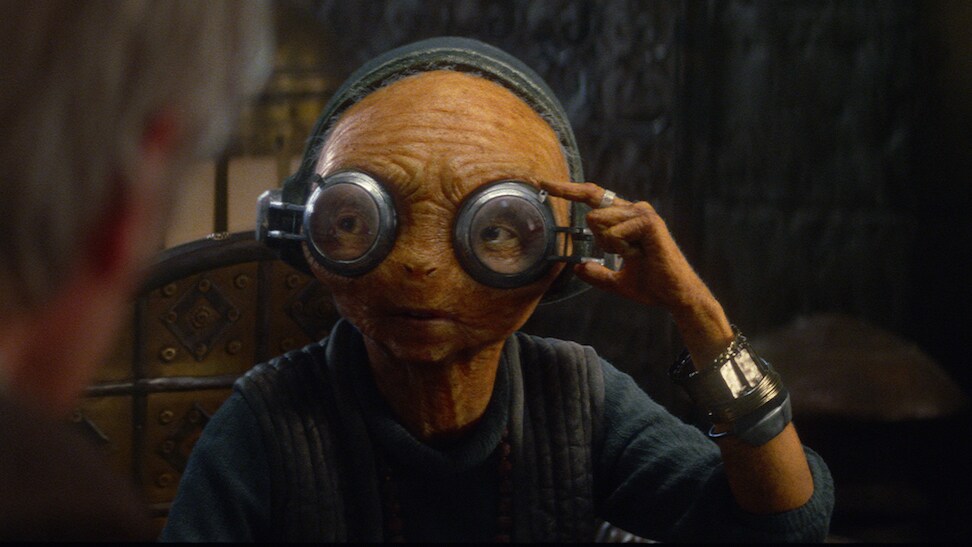
Lupita Nyong'O as Maz Kanata in "Star Wars: The Force Awakens"
Academy Award Winner Nyong’O appears twice on this list courtesy of her role in “Star Wars: The Force Awakens” (#1 on the list) and “Star Wars: The Last Jedi” (#6 on the list) as Maz Kanata, a computer generated (CG) character. Lupita provided voice work and motion capture, but otherwise there is no way to tell its her under the special effects. 

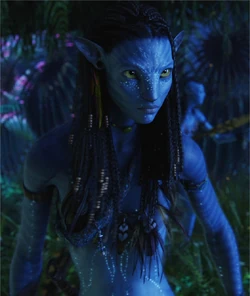
Zoe Saldana as Neytiri in "Avatar" 
Zoe Saldana played Neytiri in “Avatar” (#2 on the list) who is an alien CG character with blue skin. Just like Lupita, Zoe provided the motion capture and voice work for this performance and did not show off her black skin any time during the movie. Saldana is no stranger to these types of performances, as she has worn green skin for her portrayal of Gamora, an alien assassin, in the Marvel Studios franchise “Guardians of the Galaxy”. To be fair though, she can be seen in the role of Lt. Nyota Uhura in the reboot of the “Star Trek” movie series, a character originally made famous by Nichelle Nichols in the original TV series. The new movie series is not on the list of top ten highest grossing movies of all time, so it would not be considered a blockbuster. 

Gugu Mbatha-Raw as Plumette in "Beauty and the Beast" 

Finally, “Beauty and the Beast” (#9 on the list) featured Gugu Mbatha-Raw as Plumette, a character trapped in the form of a feather duster. The movie does show Gugu’s human features eventually, but not until the movie’s climax.  She spent more time being seen as an inanimate object, than being seen as a Black woman in this role! 

None of this is to say that there is ANY correlation between hiding Black women, equals a movie will earn more money, but Daisy Ridley (“The Force Awakens” and “The Last Jedi”), Kate Winslet (“Titanic” at #3), Bryce Dallas Howard (“Jurassic World” #4), Maggie Gyllenhaal (“The Dark Knight” #7), Scarlett Johansson (“Marvel’s The Avengers” #5), Felicity Jones (“Rogue One: A Star Wars Story” #8), and Emma Watson (“Beauty and the Beast”) all had opportunities to star or co-star in blockbusters and they were each seen exactly as they are in real life. Where were these opportunities for Lupita, Zoe, Gugu or any other Black actresses? These three beautiful, black women could not have starred as the female lead in any of these other movies and those films not had the same financial success? 

This is a problem more exclusive to Black women. Black men who feature in movies from this list such as John Boyega (“Star Wars: The Force Awakens and “Star Wars: The Last Jedi”), Samuel L. Jackson (“Marvel’s Avengers”), Morgan Freeman (“The Dark Knight”), and Forest Whitaker (“Rogue One: A Star Wars Story”) all appear in their own Black skin in these movies. 

The “Black Panther” showed us Black women as a General, Spy, Queen, and an Inventor in featured roles. This movie’s financial success does not excuse Hollywood’s poor track record for how Black women are displayed in its biggest films, but hopefully it highlights the issue, and leads to action that can remedy this problem. 

So this is another reason to root for the financial success of the “Black Panther”.

#WakandaForever

Monday, April 10, 2017

A Week In the Life of a Star Wars/Marvel fan

I was going to write a post last night, to talk about some of the things I was looking forward to this upcoming week such as the new Kendrick Lamar album dropping this Friday along with our first look at a little movie coming out in December:


Rumor has it the first trailer/teaser for the latest entry in my all time favorite movie franchise will be dropping during Star Wars Celebration in Orlando, Florida at the end of the week; somewhere between when it kicks off on Thursday or Friday when the actual Last Jedi panel takes place.

Like I said I was going to write something, but pulled back at the last minute.  Started listening to some Fela Kuti instead and have no regrets.

Then Marvel decided to turn a normally boring Monday morning into an event by unleashing this:


THOR: RAGNAROK TEASER!!!  I had no idea this was dropping today.

(insert every happy/excited emoji right here)

That party people, is how you get the blood flowing on a Monday morning!  AMAZING TEASER for a franchise that 'some' folks are not as warm about compared to other Marvel franchises.  Well dare I say, the naysayers may be taking cover right about now.  So here I am writing something now.

Full disclosure: I LOVE the Marvel Cinematic Universe.  Sometimes I feel like I want to live there, because the worst part of the movies is when they end, and I have to wait months on end until the next entry comes out.  So I LOVE when there is news from official channels about the upcoming movies whether its a poster, footage in the form of teasers and trailers, to when tickets go on sale weeks ahead of time.  I've made it my business to be at the first showing of these movies at 7pm Thursday the day before their official release on Friday because I cannot risk being spoiled about ANYTHING once the movie is out.

And of course when it ends I am sitting in my seat waiting for the post-credits scenes, cuz Marvel always likes to tease the future.  I can't decide which tease was better when Nick Fury teased the Avengers Initiative to Tony Stark at the end of "Iron Man", or the appearance of Thanos at the end of "Avengers"?

Sidenote: it kills me seeing folks get up to leave when the credits are rolling.  I just want to shout to them, "WHERE ARE YOU GOING? THERE IS STILL MORE TO SEE!!!"

So while I had every intention of writing last night about the things I was looking forward to this week, sometimes its the things that we do not see coming that end up making us just as happy as well.

But who am I kidding....If the "Last Jedi" teaser has a lightsaber igniting along with hearing the first bit of new dialogue from LUKE MOTHERF_CKIN' SKYWALKER in over three decades, how could that NOT be the best thing to happen this week?

May the Force Be With You
Make Mine Marvel


Saturday, April 8, 2017

"Many Facez" by Tracey Lee: 20 Years Later


1997 will be remembered as the year that saw the release of the Notorious B.I.G’s  double album “Life After Death”  on March 25, mere weeks after he was murdered.  A few months later the Wu-Tang Clan dropped their double LP “Wu-Tang Forever” on June 3.  Sandwiched in-between those two releases was a debut album from an up & coming emcee who hailed from Philadelphia and who made a name for himself in Washington, DC while attending Howard University.  Powered by the hit single “The Theme: It’s Party Time” and featuring the last recorded verse from Biggie while he was still alive, “Many Facez” by Tracey Lee is celebrating twenty years since its release in 1997.

Now what’s interesting about this album is those of us who were involved in its creation cannot quite pin down the exact date of its release.  Sure if you do a search for it in Google, it comes up as March 25, 1997, but keep in mind this album dropped at a time before Google was really a thing, of indexing history and the internet as we know it today.  Plus this is the same date that Big’s album dropped.  I personally do not recall picking up “Many Facez” on the same date that I picked up Big’s album.  Quick story: I used to road manage Tracey, and we were out on the road somewhere in the United States, and earlier in the day on March 24th we were at a Mom & Pop record store at a strip mall type location.  The owners told us that they would open up at midnight to start selling Big’s album, and we definitely planned to return later that evening so that we could pick up Big’s album as we continued on our promo run (special R.I.P. to the one and only Garnett Reid who took us out everywhere on the road).  When we returned later that evening, I remember picking up Big’s album, but not Tracey’s. We surely would have grabbed multiple copies of each had both been available for sale.  
Marley Marl & Tracey Lee outside of Hot 97 in NYC


I do remember that the record label, Bystorm/Universal originally planned to release Many Facez on March 25.  There was a belief that record buyers who went to pick up Biggie’s album, would also pick up Tracey’s album.  Speaking for myself I never thought that was a wise idea, and my recollection, thankfully, was that at the 11th hour a decision was made to delay the album by about 2 weeks, making the new release date April 8, 1997.  This is the date I remember, and oddly enough if you look up Mancy Facez on Amazon, April 8 is what comes up as the original release date.  Plus its chart history over on Billboard.com indicates that it debuted two weeks after “Life After Death” instead of debuting the same week.  It’s a fascinating, small controversy that Tracey and I have good banter over!

As far as the album goes, “Many Facez” was a concept album showcasing the different sides of Tracey, or the many faces.  They were, L, Rock, LR, Tray, and Mr. Lee.  These personalities allowed Tracey to be versatile in his song making using wih different flows, different rhyme patterns, and different styles; it all just depended on which face he was wearing.  Back then we probably did not articulate this concept as well as we could have, but as the album gets older I appreciate it more and more.  Listen to the album today, and you will see what I mean.  

Yours Truly, Pharohe Monch, Tracey Lee & DJ Parlay


One of the areas of “Many Facez” where this was evident was in the sequencing of having the song “Repent” appear before “Give It Up Baby” the second commercial single released from the album.  “Repent” was an LR record, and it was as far away from being a commercial record as there could be as exemplified by the hook, “don’t you hate n-ggas who make records for b-tches?”, yet this record was followed by its antithesis “Give It Up Baby” featuring Tray, the ladies man, a record that was made to have commercial appeal and get spins on the radio.  This was purposeful sequencing and one of the ways the concept of “Many Faces” was meant to come to life.  


My favorite record on the album hands down is “Stars in the East” featuring another one of HU’s finest in One Step Beyond (Kenyaflow, MID, and John Doh representing the Bronx, Newark, and Philly respectively).  The Jones Girls “Nights over Egypt” sample alone makes this a classic record, and Tracey in the L persona trade verses with Kenyaflow and MID was nothing short of magical.  This song could still be released TODAY and it would be a smash, it’s that good!
Biggie, D-Dot, Yours Truly, and Tracey Lee

“Keep Your Hands High” will always be special, because this is the last record that Biggie did a verse on while he was still alive.  Recorded at D&D studios, Biggie and Tracey traded verses as if they had been rhyming together for years, and I could not help but think that this would be the first of many collaborations between the two of them, since the head of Tracey’s label, Mark Pitts was also Biggie’s manager.  A few weeks later in Los Angeles on March 9, 1997, Fate would have other plans as Big was murdered shortly after leaving a party that we had also attended.  When it came time for “Many Facez” to drop, we were unable to use Biggie’s name on the sticker that would showcase songs and features on the album.  I didn’t even know that sort of thing required permission.  Live and learn.  

Of course I can’t talk about this album without talking about the hit single “The Theme: It’s Party Time”.  Catchy, infectious, a roof raiser, or party starter you name it THIS record was the SHYT in ‘96-’97 when it was out and can still get the party going today.  DJ Red Alert was the first DJ to play it on his show in NYC in November of ‘96.  Before we knew it, we were on a plane to Atlanta in January the following year performing at a party in honor of Nas’ second album going double platinum, and I just remember seeing the whole club raising the roof as the song was performed and singing “It’s party time...Whoa It’s Party Time”.  It was at this point I knew Tracey had something special.  This was twenty years ago, and it seems like only yesterday.  

So I want to send a special shout out to my friend, and my brother Tracey Lee as we celebrate the 20 year anniversary of his debut album, “Many Facez”, an album that took us all over the country and allowed us to see things we could only dream of.  You made a helluva debut album, and I can’t wait to reminisce about this over the course of the next twenty years!

If you want to purchase “Many Facez” or any other album in Tracey’s discography head over to http://traceyleemusic.com/

"The Get Down" Part 2 Review


Much to my delight this past Friday April 7th, Netflix released Part 2 of "The Get Down".  I was anxious to see the further adventures of The Get Down Brothers (Books, Shaolin Fantastic, Ra-Ra, Boo-Boo, and Dizze) and Mylene Cruz and the Soul Madonnas.


Some criticism of Part 1 was that its scope was so ambitious that at times it seemed the story meanders a bit, particularly in its presentation of the early days of hip-hop.  I stress that this is a drama, and not a documentary.  "The Get Down"  never aimed to be a historical, fact by fact telling of important milestones in the development of hip-hop.  This is a fictional ,coming of age story about a group of kids who grew up in the Bronx during the tumultuous 1970's, and it would be impossible to tell this story without including the early days of b-boys and b-girls (as well as the decline of disco.)

This is not to excuse some of the historical anachronisms that exist (such as some members of the crew who were rapping in double time, which was not a prevalent style of rhyming at this point in time for example) but its fun to see how these characters come into contact with this culture either through the rapping, playing music or through other means (some which were not so noble) These moments are what makes "The Get Down" so special, because if this culture means anything to you, you probably remember that moment when you discovered, it or when you fell in love with it; and for a lot of us the discovery and love were one in the same!

Compared to Part 1, Part 2 is a bit more streamlined.  The characters are established, the origin bits are out of the way, and they can pretty much get down to business in each episode.  For those who disliked Part 1, or found it a chore to make it through all the episodes, I would definitely say give Part 2 a fair chance.  Each of the episodes treat the expression of hip-hop as something that already exists, albeit in its earliest form, and does not have to stop and explain various elements at every opportunity.  Even when it does, such as when Books is explaining how a DJ finds the 'get down' part of the record and brings it back and forth between two turntables to a co-worker, it moves at a brisk pace and does not take up half of the episode.


If you enjoyed Part 1, these five episodes that make up Part 2 really bring the whole series together.  Being familiar with the characters, you will empathize with their various journeys and struggles even if some seem predictable, the cast is so likable you may find that you talk to yourself when certain characters meet obstacles, or express their frustrations about how life is treating them at a particular time.  Strip everything away, and a few of us, i'm sure have been in one of these characters shoes at one point or another.

A pleasant surprise in the storytelling mechanism for Part 2 is at various points throughout the episodes the story is told via a comic book strip where the characters and setting are animated and the actors provide voice-overs for their respective avatars.  I wonder how this series would have been received had it been completely animated.  We may never know, but for the parts where this did appear, I appreciated it tremendously.


Finally, as Part 1 had appearances by actors playing Grandmaster Flash, and Kool Herc,

*** spoiler alert***

Part 2 introduces the final member of the hip-hop trinity in Afrika Bambaattaa & the Zulu Nation.  No the show does not delve into the controversies surrounding him, he and his crew play a key role in the climax that is  similar to the opening few minutes of "The Warriors" .  It will be interesting to see how purists respond to this part of the story.


My review of Part 1 of the Get Down can be found here


Peace, Love & Unity

update: This new track from Nas that is featured at the start of Episode 3 "Angel Dust" just popped up on youtube today.  So dope!


Sunday, September 25, 2016

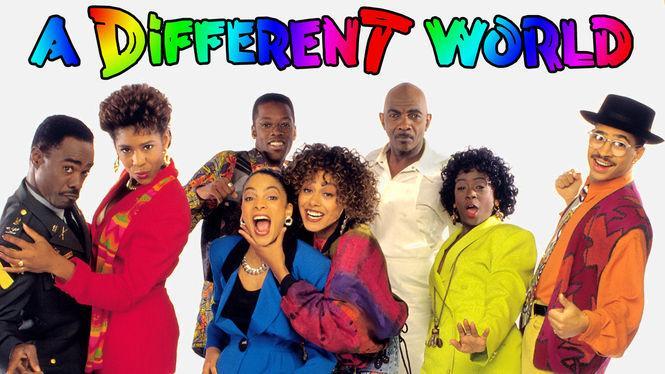
A Look Back on "A Different World" 29 Years Later


12060244.jpg

When “A Different World” (ADW) debuted on NBC in September 1987, the show that it started out as, was much different than the show it became by the time it wrapped in 1993.  The first season was about Denise Huxtable from “The Cosby Show” who was now attending Hillman College, a fictional HBCU, yet the show was missing something.

Starting in season two, director Debbie Allen was brought in to be the chief creative force of the show, (herself a graduate of an HBCU via Howard University) and had an immediate impact and became the catalyst who helped to transform this show from being a “safe” Cosby Show 2.0 type show, into a more authentic representation of what college life was in general and specifically at an HBCU.  This series along with Spike Lee’s 1988 film “Do The Right Thing” was among the many reasons why HBCU’s saw increased enrollment at the time.  From a mix of both veteran and unknown African-American actors, poignant topics  to the show’s opening montage and theme song, by season two, ADW more accurately represented the look and feel of an HBCU.  


Throughout its six season run, ADW showcased aspects of life at an HBCU such as, student activism, black fraternities and sororities, and Homecoming festivities which had rarely if ever been broadcast on television.  Current events of the time were also tackled such as the first Gulf War and boycotting companies that invested in the South African Apartheid government.  Part of what made this so unique was that these stories were told through the lens of African-American men and women in a college setting, and it stayed away from the usual tropes and stereotypes that too often accompanied African-American appearances in the media, both in fiction as well as on the nightly news, at the height of the crack-cocaine epidemic.  Positive role models were featured throughout the show and substantive issues were addressed.  The HBCU vs PWI topic was featured in a season three episode entitled, “Here’s to Old Friends”.   The show’s lead character, Whitley Gilbert, recounted a story her grandfather (who was a Hillman graduate) told her, that she could attend school anywhere, but that “no school will love you, and teach you to love yourself, and know yourself like Hillman”.  I’m sure most students and alumni of any HBCU will agree with that statement as they all have that in common.  The strong sense of identity one gets from attending an HBCU is not replicated anywhere else.  


Many of my classmates at Howard University attended off the strength of this series.  During freshman year, one of the few times I recall signing into the Quad (the freshman girl’s dormitory), was to join a group of friends so that we could watch this show in the same space.  Like many shows today, that have a tribe of folks who watch in real time via social media, ADW brought us together as we felt like we were watching our lives on television.


Another episode that stands out to me was “Dr War is Hell” (Season 2, Ep. 1) which revolved around math major Dwayne Wayne attempting to get out of taking a calculus class with Professor Colonel Taylor (aka Dr. War) who was known as one of the toughest professors on campus.  Professor Taylor was eventually able to convince Dwayne to take his calculus class by impressing upon him that he could see from his transcripts that he was a great student, and wanted to challenge his mind in order for Dwayne to reach his full potential.  


The image of an older African-American male, taking an interest in the future of a younger African-American male was something that was rarely seen on television.  At the same time Professor Taylor made it clear that he was going to challenge Dwayne, but did so with a compassion that is a hallmark of the HBCU professor/student experience.  Moments like this were common on ADW, and no doubt picked up on by many aspiring college bound African-American high school students as well as their parents.

I always looked at ADW as being timeless, since it was set on a college campus.  The cast could be refreshed every few years, while storylines remain contemporary with the times.  Debbie Allen has expressed interesting in reviving the series.  Unsurprisingly, the current racial climate of the country is being credited with the recent surge of enrollment at HBCU’s.  Perhaps this could be the premise for the series revival.  I would certainly welcome its return.


Below is a clip from the first episode "Reconcilable Differences" which aired September 24, 1987, along with a clip from the "Here's to Old Friends" episode.


Sunday, August 28, 2016

When I first heard "Rebel Without a Pause"..


Cassette tape recordings of many college, underground, and mainstream hip-hop radio shows


Nowadays it is easy to take for granted that there was a time when hip-hop was not as big on the radio as it is today.  As hip-hop music started to grow, the experience of how to listen to it proved to be an enriching one.  What was lacking at the time in streaming music services, satellite radio, or smartphones to store music, built a certain fortitude when having to record music from hip-hop radio shows on terrestrial radio stations onto cassette tapes.  When music filled up on one side of the cassette, it was common practice to break the tab off of the top of the tape in order to prevent that side of the tape from being recorded over.  This sounds primitive now but it was effective.  If I decided to record over what was previously recorded, all I had to do was place tape over the space or fill it with a tiny piece of tissue.  It was easy at the start of a show to hit PLAY+RECORD and fill up Side A of the cassette, but if you fell asleep, and did not flip the tape over to record Side B for the middle to end of the show? That was never good -- chances were that you would miss the part of the show when all the new, hot records would get played.  Thankfully, when auto-reverse tape decks came out, that helped alleviate this scenario.  To think back on how innovative that auto-reverse tape deck was is hilarious!  The good old days indeed.
A cassette with both tabs broken to prevent erasure on either side. 

In NYC as far as mainstream radio, hip-hop was relegated to mix shows on Friday and Saturday from 9pm to midnight on 98.7 KISS FM and 107.5 WBLS.  Other than this timeslot it was rare to hear hip-hop on these particular stations at any other time of the day, unless the song was REALLY popular like  “Roxanne Roxanne” by UTFO.  Contrasted with today where the same few songs are in rotation seemingly every hour each day.  Fortunately, there were options Monday thru Thursday in the form of underground and college mix show stations and often times these stations would debut songs well before they got recognized by the mainstream stations.  

  One such station was 90.3 FM WBAU at, Adelphi University in Long Island.  On Monday night into Tuesday morning, from 10pm to 1am.  I used to listen to the “Operating Room” hip-hop radio show hosted by Dr. Dre - who would go on to host Yo! MTV Raps - and was from the hip-hop group Original Concept, along with T-Money, Wildman Steve, and a host of others.  Even though Monday’s were school nights I used to listen religiously each week.  Digital radio tuners were around back then, but I had my radio boom box that had a manual tuner.  What does that mean you ask?  Well, unlike the mainstream stations which I could easily turn the dial to line the pointer up properly with the number of the station, most of these stations required PRECISE tuning of the dial.  It was possible that the dial needed to be turned so that it rested perfectly between two numbers for radio stations because the station you needed did not have a number represented on the dial.  So you had to guesstimate.  And if the station was on the lower end of the frequency, it may have required you to contort your body a certain way, like lifting your foot or leg up, in order to conduct the radio waves properly into the tuner.  Crazy as this sounds these are all true stories.  But these were the things we did because of the love of the music.

boombox.jpg
Boombox complete with manual tuner and tape deck. Batteries not included. 


    I remember one show in 1987 like it was yesterday.  Dr. Dre was talking, and said that he had an exclusive new record from Public Enemy that he was going to play called “Rebel Without A Pause”.  Public Enemy frontman Chuck D, had a show on this same radio station called Spectrum City Sound, along with other members of the PE production team The Bomb Squad Hank & Keith Shocklee.  I never listened to their radio show, but knew all about Public Enemy as they had just recently released their debut solo album “Yo! Bum Rush The Show”.  I LOVED Public Enemy when they first came out.  In my opinion Chuck D had the most powerful, distinctive voice and was a great emcee.  So hearing Dr. Dre say he had a new record from Public Enemy, was a big deal especially since their first album was still pretty new up to this point.  The problem for me was it was close to the midnight hour and I could feel myself starting to fade.  Luckily, I managed to turn the tape over in time, and press RECORD so if anything I knew the next day I would have the song on tape.     

My eyes were almost shut when Dr. Dre put that record on.  I remember hearing slight static on the record at first, before hearing the following:

“Brothers and sisters….Brothers and Sisters I DON’T KNOW WHAT THIS WORLD IS COMING TO”

And then the beat dropped...followed by the scratching...then that high pitched WHISTLING sound along with Chuck D’s voice:

YES

THE RHYTHM
THE REBEL
WITHOUT A PAUSE
I’M LOWERING MY LEVEL


I ROSE UP out of my bed and was now fully awake and at attention! I had NEVER heard anything like that in my life, and quite honestly have never heard anything like that since.  It was a religious experience.  If that song debuted at a cemetery the dead would have also risen.  Between the beat, that high pitched whistle that kept repeating, and Chuck’s voice, which on this record now sounded more powerful than Black Bolt of the Inhumans, it was like the greatest hip-hop record ever made.  Instant classic, not up for debate!  The greatest five minutes on wax.  And Dr. Dre knew he had one, because after the song ended, I am not even sure he let two minutes go by, without putting that record back on and letting it rock again.  And I had it on tape!  All I could think about was playing that tape over and over again, just so I could hear that sound again.  That repeating whistling sound.  Incredible.   When my father first heard the record he called it something akin to “interrogation music”.  I could imagine some military in the world playing “Rebel Without A Pause” endlessly until some POW broke! (I cannot find this tape to save my life today!) 

    I am not even sure how the next day went.  I imagine I took that tape to school, and asked my friends if they heard the song and played it for those who had not heard it.  I cannot even say for sure if I did that, but I will always remember what I did the night before.  The night WBAU debuted Public Enemy’s “Rebel Without A Pause” before ANY other station had it, and months before PE dropped their classic “It Takes a Nation of Millions to Hold Us Back” album which had “Rebel Without A Pause” on it.  I was living in a moment in hip-hop history, but did not even know it yet.  This was the song that solidified Public Enemy as legends in my mind.        

College mix shows and underground stations were where it was at if you were into hip-hop back then which is why I really do not trip off of what mainstream radio does nowadays when it comes to oversaturating the airwaves with the same few hip-hop songs.  For me mainstream radio stations were never tastemakers for hip-hop music.  Let’s go back to when Mr. Magic of 107.5 WBLS and their Rap Attack show played a demo version of one of Public Enemy’s earliest songs “Public Enemy #1” and how Mr. Magic dissed them after the song talking to co-host Marley Marl, “Marley the beat is dope but the rapping is kinda weak” along with the infamous line “no more music by the suckers” which PE ultimately sampled on another one of their songs “Cold Lampin’ Wit Flavor” from Public Enemy’s very own Flavor Flav.  Magic even took a shot at Dr. Dre and the WBAU crew here (“Dr. Duck and the boys from Long Island..Woody Woodpecker and the guys from down the dial”)

check it out: 


The following Monday, Dr. Dre played this bit from Mr. Magic on their show, and you can hear their reaction to the diss at around the 4:46 second mark. Hysterical. 


Do you remember the first time you heard “Rebel Without A Pause”, or “Public Enemy No.1”?  What about the first time you heard any of your favorite hip-hop records?  Sound off in the comments below.   


Peace, Love & Unity

Monday, August 22, 2016

What "The Get Down" Meant to Me


On Friday August 12, Netflix debuted a new original series, “The Get Down” with six episodes.  The remaining six episodes are expected to make their debut in 2017.  I watched these episodes in a day and was left with a strong sense of deja vu.  Over the course of viewing the series, I constantly kept getting that “feeling”.  You know the one I’m talking about right?  The feeling you got the first time you heard “Rockbox”, “Eric B is President”, or “Rebel Without A Pause”.  In a way it is almost indescribable, yet perfectly embodied by the moment you heard the beat drop from any of these songs -- you may not be exactly sure why but all of a sudden the hairs on the back of your neck or arm are standing up, and when that happens it is a good thing!  “The Get Down” made me feel the way I used to the first time I heard my favorite hip-hop records.    

The trailers for “The Get Down” may look like a mash-up of “The Warriors”, “Fame”, or “Sparkle” and some reviews have compared it to  “Westside Story” and “Empire”.  I think those comparisons are inaccurate.  For me,  “The Get Down” is more like “The Goonies” as this is a coming of age story, but I also found elements that reminded me of a Marvel superhero film, particularly their origin movies like “Iron Man” and “Captain America: First Avenger”.  It may seem exaggerated, over-stylized, or at times come off like a fairy tale, but this series tells the story about the early days of HIP-HOP, so I found the storytelling mechanisms to be appropriate.  There have been other movies or shows that contain a hip-hop element or two, but never something that has been able to take all the various themes, and weave them together to tell the story about what hip-hop culture was like at the onset. As more time marches forward and away from that era, those stories may sound like mythology, yet “The Get Down” manages to visually convey the tales that had only existed on vinyl or cassette and present them in a dramatized form.    

“The Get Down” takes place in the South Bronx in the summer of 1977, set to the backdrop of disco, burning buildings, gang violence, a historic heat wave (which ultimately led to a citywide blackout), and a hotly contested NYC mayoral race.  What makes “The Get Down” unique is that the story is told through the lens of HIP-HOP, tracing its roots of bringing people together to have fun in a safe environment while listening to music and dancing, to deejays being able to control the crowd through their musical selection via the ‘get down” -- the part of the record which they loop using two of the same records on two different turntables, to the wordsmith or emcee reciting poetry over the get down section.  Like I said earlier, to some this may look like a story you have seen before, but to the best of my knowledge, the story has never been told from this reference point.  With the fashion, art, slang, and socio-political climate of New York City, these factors combined to yield what may be the most important youth culture the world had ever seen.  This is what makes the main character of the series so compelling.

The secret sauce of “The Get Down” is that HIP HOP is the main character.  The actors are avatars who represent certain aspects of the culture.  Ezekiel (Justice Smith), is the “wordsmith”, too scared at the opening of the series to embrace the gift within him.  Mylene (Herizen Guardiola) is a pastor’s daughter and singer who wants to be the biggest disco singer since Donna Summer and dreams of making it “across the East River”.  Shaolin Fantastic (Shameik Moore), the “B-boy” extraordinaire: graffiti writer, dancer, aspiring DJ who is on a quest to find a rare record for its get down section, by chance crosses paths with Ezekiel, who happens to be looking for the same record albeit for very different reasons. It is through these characters along with some others that drive the plot, and make “The Get Down” one of the most unique television experiences in a long time.

The episodes usually open with a rap narration by Nas, one of the executive producers on the series.  Nas’ rap narrations are done from the point of view of adult Ezekiel, and the series actually flashes back to Ezekiel’s teenage years, starting from the last day of sophomore year in high school, which is also the first day he meets Shaolin Fantastic.  The title for each episode is written in graffiti alongside a passing subway.  What looks to be stock footage of the Bronx from the seventies is also intertwined into each episode, but also at times there are scenes from the show with the actors in them that have that vintage look.  These are just some of the stylized ways “The Get Down” is presented.  The first episode, which is the only episode that was directed by the series showrunner Baz Lurhrmann, is about ninety minutes long.  Look at this episode as a made for tv movie, and not a traditional television episode.  It is long, but necessary as a lot of points need to be established.  For me if the episode was broken up into two parts something would have been lost.  Trust me though, the climax of this episode is worth the long run time.  Subsequent episodes are shorter in length.  I mentioned earlier that most of the characters in this series are fictionalized, but I should point out there are a few real characters that the show introduces, and presents them in a way that makes them come off like superheroes, which further reinforces my comparison of this series to a Marvel film.  

*Mild Spoilers follow*

Grandmaster Flash, who is also an executive producer on the show, appears as a character (portrayed by an actor) on the show.  He is Shaolin Fantastic’s mentor, who sends him out on the quest to find a rare record with the Get Down.  The relationship between the two is presented as in the form of sensei and pupil.  Shaolin aspires to be a DJ, while Flash provides anecdotes for his student to think about.  Among those is learning to trust others, and it is through this that Flash requires Shaolin to find a “wordsmith” which once he does, only then will Shaolin be on the right path to becoming a DJ.  I appreciated the relationship these two had and the way it was presented almost in the form of an old school martial arts flick.  More than a handful of early hip-hoppers were fans of these types of movies as they played in Times Square during the seventies.   I also felt this made Flash seem like a larger than life character and rightfully so.  As one of the founding fathers of hip-hop, his role was treated with the type of reverence that is becoming of someone of his stature.  The last bit of advice Flash gives Shaolin is, “If you want to be a true DJ conquer your street, conqueror your park, conqueror your neighborhood, conqueror your borough, conqueror your city, and the world is yours”. Prophetic words indeed!

Kool Herc is another character who is portrayed by an actor in the series, and while his character has not had as much screen time as Flash, his influence is talked about prior to actually meeting him, and when he is finally introduced he helps set in motion the climax of the sixth episode, which is the halfway mark of the series.  Near the end of the first episode Shaolin Fantastic talks about the “3 Kingdoms”, and how the West has DJ Kool Herc who has the biggest sound in the Bronx, and right on cue the bass from a speaker system can be heard in the distance.  The main cast does not meet Kool Herc until the end of episode four, and he literally appears in the form of a towering, afro silhouetted figure, after Ezekiel, Shaolin, and their crew crashes one of his parties.  The start of the subsequent episode is when Kool Herc is properly introduced, and he talks about how he started doing these parties to keep the kids off the street and out of trouble, and how he is about peace, unity and respect.  As Shaolin relayed earlier in the series, there is a reason why Kool Herc had a kingdom, and his time on-screen captures how magnetic his presence is.  All eyes in the room are on him, and seeing how some of his people have beef with Ezekiel, and Shaolin’s crew, Herc orders them to settle their differences via a DJ Rumble: Herc’s crew The Notorious Three versus The Get Down Brothers using their system, their records, and their rhymes where the winner is determined by who can rock the crowd the most.  I have to say this is one of those times during the series where I got the feeling.  Hearing these stories told in song, is one thing, but there was something magical about seeing this play out on-screen.  My words do not do it justice!

Of course there are other plot lines that take place throughout the series, each of them directly or indirectly playing their part in the formation of hip-hop in these formative years.  I wanted to highlight the ones that really meant the most to me as someone who grew up discovering hip-hop at a young age, and is now an adult who still has love for the culture.  “The Get Down” over the course of six episodes for me has earned its place as an instant hip-hop classic, for simply reminding me that I am not too old to experience the feeling one last time.  

Peace, Love & Unity

A photo of the subway (probably the 4 Train) alongside old Yankee Stadium circa the 70's from the family archives!


Chronicles of a B-boy Superhero at the Hip-Hop Museum, DC

..As the interview ended Lord Finesse made his way from behind the table.  I cued the footage to the 1:28 minute mark, the exact moment Fin...